WFM GROUP IS A MANUFACTURER OF COATING MATERIALS TO PROTECT PARTS FROM WEAR
• OWN SCIENTIFIC DEVELOPMENTS
• HIGH QUALITY PRODUCTS
• FLEXIBLE PRICING POLICY
WELDING FUSION MATERIALS GROUP
Welding Fusion Materials Group is a manufacturer of modern alloys to protect basic materials from wear. Today, we provide consulting, development, manufacturing and installation services of equipment in Ukraine and abroad.
We have our own well-equipped production facilities. Our specialists carry out systematic work on technological research, implementation and use in production of new modern technologies. Therefore, the products of the WFM Group company allow to significantly reduce the cost of repair and maintenance of technological equipment. You will be able to increase production capacity, reduce the cost of production, and increase the level of labor safety.
Our materials are constantly being improved and are successfully used at enterprises: household appliances, automotive, aviation, chemical industry, machine tool construction, woodworking, drilling equipment, glass production, coal industry, metallurgy, non-ferrous metal processing enterprises.
We always adhere to high standards of quality and certification, invest heavily in our own scientific developments. This gives us the opportunity to be the leader of the European market.
DIRECTIONS OF WORK OF THE WFM GROUP COMPANY
Production and implementation of modern coating materials and alloys, which are used as protective and reinforcing metal coatings of the working surfaces of parts of equipment or mechanisms that wear out quickly.
Technical support and consulting in choosing the optimal technology or the best materials available today in global practice, which significantly increase the wear resistance of critical components of production equipment.
Scientific research and testing of new composite materials, assessment of their future effectiveness and economic feasibility of implementation depending on the operating conditions of technological equipment.
PRODUCTION OF PRODUCTS IN ACCORDANCE WITH EUROPEAN QUALITY STANDARDS
PRODUCTION OF PRODUCTS ACCORDING TO CUSTOMER REQUIREMENTS
OUR PRODUCT

WEAR-RESISTANT BIMETALLIC PLATES RTP.
RTP bimetallic plates are two-layer metal sheets consisting of a layer of low-carbon or heat-resistant steel and a wear-resistant...

WEAR-RESISTANT BIMETALLIC PIPES RTT.
Wear-resistant welded pipes and pipeline elements are the best solution in the field of wear protection of nodes and parts of technological equipment...

CAST TUNGSTEN CARBIDE "RELIT".
Cast tungsten carbide “Relit” is best suited for wear resistance of surfacing parts of machines and mechanisms. They work in conditions of intense...

COMPOSITE RODS FOR REINFORCEMENT OF DRILLING TOOLS.
WFM Composite Rods – are crushed solid alloy of a certain fractional composition, which is filled with brass solder. These...

POWDERS AND MIXTURES FOR SURFACING.
Surfacing powders and mixtures are intended for gas-flame surfacing or gas-thermal sputtering with subsequent resurfacing...

WELDING CORD
The welding cord WFM FW65-05-07 is a self-fluxing flexible cord based on the NiCrB alloy. It has a high tungsten carbide content to protect surfaces subject to friction...

POWDERS FOR DRILLING TOOLS.
WFM-55WC powder based on NiCrSiFeB with tungsten carbide content is designed for gas-thermal powder facing using SuperJet...

WELDING RODS
Welding of compacted surfaces of parts of energy, oil and other fittings, operating at a temperature of up to 600 °C and a specific pressure of up to 800 kgf/cm 2 ....

WEAR-RESISTANT COMPOSITE ELEMENTS.
Wear-resistant composite element (WRCE) is designed for installation by electric or argon-arc welding on parts of machines...

FLUX-CORED WELDING WIRES.
Flux-cored welding wires PP-Np-80X20R3T. Flux-cored welding wires PP-Np-80X20R3T consists of a metal shell and filler powder. The old designation....

POWDER COMPOSITES.
Powder composites are produced by the method of spheroidization in a special furnace in a controlled atmosphere. They are intended for detonation (class “M”)...

FLUX-CORED WELDING TAPES.
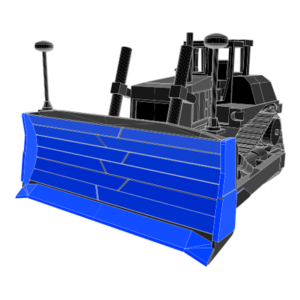
Flux-cored welding tapes are designed for surfacing parts that work under conditions of abrasive wear: blades of bulldozers, furnaces...

WELDING POWDERS FOR GLASS INDUSTRY.
Surfacing powder for the glass industry is a low-temperature, self-fluxing alloy designed for gas-thermal wear-resistant powder...

ELECTRODES WFM – IN 214.
It is intended for manual electric arc welding with an open arc of a wear-resistant alloy on steel parts that work in conditions of high abrasive, gas and hydro-abrasive action...
USE OF WEAR-RESISTANT MATERIALS
WEAR-RESISTANT MATERIALS IN ENGINEERING
Wear-resistant materials are often used in mechanical engineering, where parts or products are produced that contain: moving parts – gears, bushings or bearings – prone to wear damage. Such parts will require less maintenance and less frequent replacement. This ensures that workflows remain fast and costs are kept to a minimum. They will work well in the most difficult conditions of stones, sand, coal, minerals and other harmful elements.
WEAR-RESISTANT MATERIALS IN THE MINING INDUSTRY
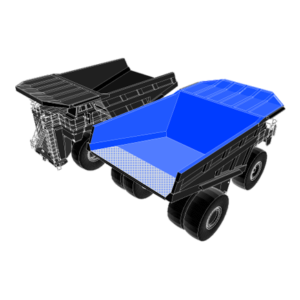
Equipment at enterprises of the mining and metallurgical industry requires constant maintenance and replacement of spare parts. A significant part (up to 40–50%) of these products is made using wear-resistant and impact-resistant materials capable of withstanding high working loads, whether abrasive or impact. Among wear-resistant products, grinding balls, mill linings, parts of industrial pumps, bucket teeth are in the greatest demand.
WEAR-RESISTANT MATERIALS IN THE FOOD INDUSTRY
In the food industry, the use of certain metals that provide excellent wear resistance (such as copper-based alloys) is restricted or prohibited. Here it is necessary to take into account the interaction of the material with food products. Therefore, we have developed special alloys to eliminate certain types of wear, such as galling, without reacting with the environment. A series of “milky metals” was introduced to prevent these types of wear.
DURABLE MATERIALS IN 3D PRINTERS
In 3D printing, very high strength plays an increasingly important role. Starting with components that were originally very design-focused, mechanical properties are becoming increasingly important, and manufacturing is increasingly focused on end-use details. Our wear-resistant material provides high dimensional stability and good heat resistance. When you focus on good print quality, you should always consider good wear resistance.
WEAR-RESISTANT MATERIALS IN THE GLASS INDUSTRY
Welding Fusion Materials Group offers comprehensive solutions to reduce the wear rate of equipment used in the glass industry. The use of unique powder coating materials allows you to reliably protect the responsible materials and mechanisms from the effects of high temperatures accompanying the manufacture of glass products. This method will significantly increase the productivity of your enterprise and reduce the cost of production.
WEAR-RESISTANT MATERIALS IN METALLURGY
Extremely high temperatures and the use of aggressive chemical reagents in the work of a steel shop lead to rapid wear of critically important parts, assemblies and mechanisms of equipment. Our company offers patented materials and technologies to protect against these harmful factors. Powder coating alloys based on strong metals – iron, nickel, tungsten and others – in combination with innovative application technologies will ensure high wear resistance.
WEAR-RESISTANT MATERIALS IN THE ENERGY INDUSTRY
WFM Group offers enterprises of the energy complex of Ukraine and abroad a full range of ready-made solutions for protecting equipment from rapid wear of important parts. The use of recommended powders, tapes, electrodes allows reliable protection of equipment used in conditions of high voltages. Our specialists are ready to offer you individual solutions in accordance with technological, economic or other requirements.
WEAR-RESISTANT MATERIALS IN THE PRODUCTION OF CEMENT
Our company is a leader in the field of production of wear-resistant materials for enterprises engaged in the production of cement. A wide range of materials and technologies for protecting equipment from thermal stress and aggressive chemical influence allows each customer to choose the optimal technological solution for himself. WFM Group offers exceptionally effective and reliable ways to protect equipment from high temperatures and chemical damage.
WEAR-RESISTANT MATERIALS IN THE COAL INDUSTRY
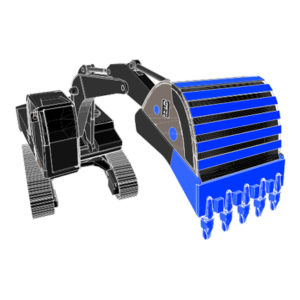
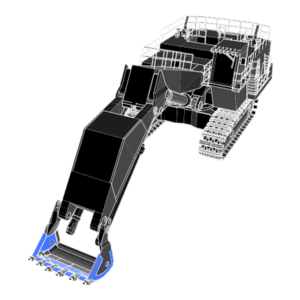
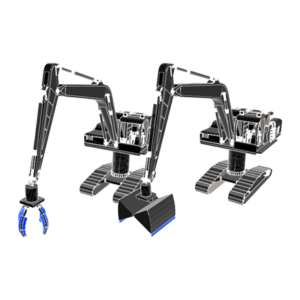
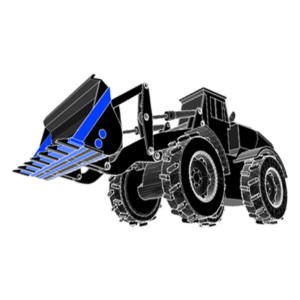
In the process of developing the earth’s interior, the responsible nodes of excavator buckets, working parts of earthmoving machines, crushers, grapples, and knives quickly wear out. An alternative to replacing critically important parts of the mechanisms is the welding of flux-cored wire and electrodes as a preventive measure. Our patented materials make it possible to increase the wear resistance of high-tech equipment during open pit coal mining by 5-10 times.
WEAR-RESISTANT MATERIALS IN PORT MANAGEMENT
The port equipment is in close proximity to seawater, which is an aggressive environment in relation to the metal structures of the cranes. Constant pressure when lifting loads leads to rapid wear of moving parts of mechanisms. WFM Group today can offer reliable methods of strengthening such parts. Thanks to modern technology, you will be able to ensure uninterrupted work on unloading ships from all over the world.
APPLICATION OF WEAR-RESISTANT MATERIALS IN MACHINES AND MECHANISMS


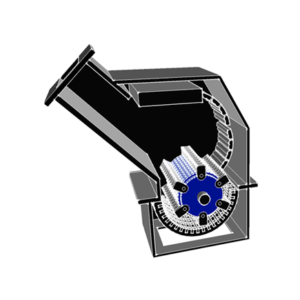
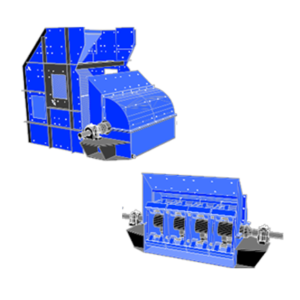
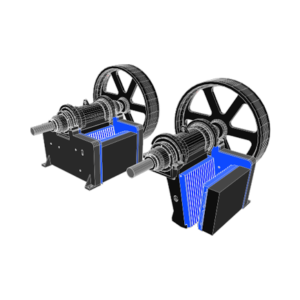
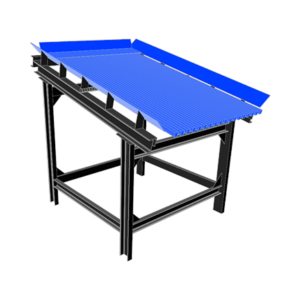
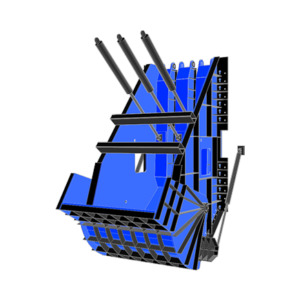
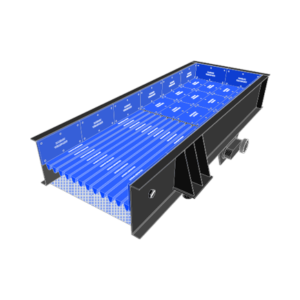
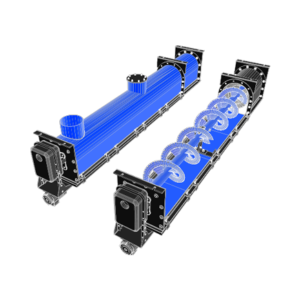
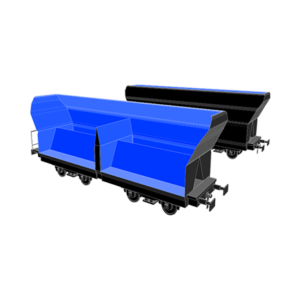
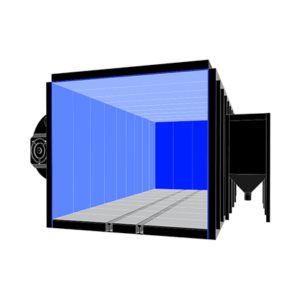
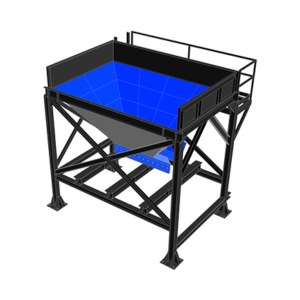
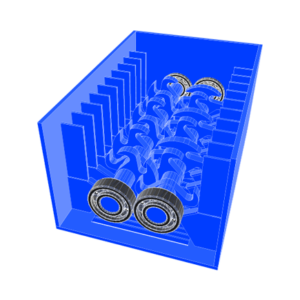
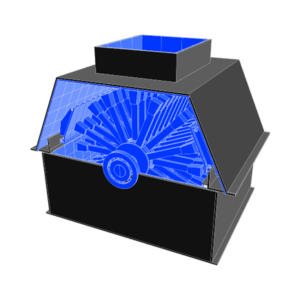
Made-to-order wear-resistant insert plates for machines or mechanisms will provide exceptional wear resistance in chutes, feeders, crushers, hoppers, buckets, etc.
Wear is mainly sliding or impact. Therefore, our materials are ideal for low to moderate impacts and can withstand all kinds of other impacts.
Installation of the insert itself, which is usually welded or bolted, is important for long service life. Using stud welding can also further increase the strength and life of your equipment.
REFERENCE MATERIAL
Surface hardness .
Hardness is important from an engineering point of view because resistance to wear by friction or erosion by steam, oil, and water usually increases with hardness.
Hardening or surface hardening is a process in which the hardness of the surface (body) of an object increases, while the interior of the object remains elastic and strong. After this process, surface hardness, wear resistance and durability increase. This is achieved by several processes, such as carburizing or nitriding, by which the component is exposed to a carbon or nitrogenous atmosphere at high temperature. As it was written, two main characteristics of the material affect:
- Hardness and wear resistance are significantly increased . In materials science, hardness is the ability to withstand surface indentation ( localized plastic deformation ) and scratches . Hardness is perhaps the most ill-defined property of a material because it can indicate scratch resistance, abrasion resistance, indentation resistance, or even resistance to forming or local plastic deformation. Hardness is important from an engineering point of view because resistance to wear by friction or erosion by steam, oil, and water usually increases with hardness.
- Does not have a negative impact on strength . Viscosity is the ability of a material to absorb energy and plastically deform without breaking. One definition of viscosity (for high strain rate, fracture toughness ) is that it is a property that indicates a material’s resistance to fracture in the presence of a crack (or other stress concentration defect).
The hardness of the material correlates with its wear resistance. If the hardness of the material itself is less than the hardness of the abrasive substance, then the rate of wear is high. The hardness of the material plays a major role in wear resistance. Some materials exhibit special wear characteristics.
Wear resistance of the material.
Abrasion of a material is the mechanically induced damage to a surface that results in the gradual removal of material due to relative motion between that surface and the substance or substances in contact. The contacting substance may consist of another surface, a liquid, or solid abrasive particles contained in some form of liquid or suspension, such as a lubricant. As with friction, the presence of wear can be both positive and negative.
Productive, controlled wear can be found in processes such as machining, cutting, grinding, and polishing. However, in most technological applications, the appearance of wear is highly undesirable and an extremely expensive problem as it leads to component degradation or even failure. From a safety perspective, this is often not as serious (or as sudden) as a fracture. This is because wear and tear is usually expected.
Certain characteristics such as hardness, density and density can have a decisive effect on the wear resistance of a material. Wear and tear has several types and is somewhat unpredictable. It is rather difficult to test and evaluate in the laboratory or during operation.
Загалом знос — це механічно спричинене пошкодження поверхні, яке призводить до поступового видалення матеріалу через відносний рух між цією поверхнею та речовиною або речовинами, що контактують. Тому існує ідеальний зносостійкий матеріал, і в кожному випадку він сильно залежить від багатьох змінних (наприклад, комбінації матеріалів, контактного тиску, середовища, температури).
In general, wear is mechanically induced damage to a surface that results in the gradual removal of material due to relative motion between that surface and the substance or substances in contact. Therefore, there is an ideal wear-resistant material, and in each case it is highly dependent on many variables (eg material combination, contact pressure, environment, temperature).
Some materials exhibit special wear characteristics. The most typical wear-resistant materials:
Ni 3 Al is an alloy .
Nickel aluminide is an intermetallic alloy of nickel and aluminum with properties similar to both ceramics and metals. Nickel aluminide is unique in that it has very high thermal conductivity combined with high strength at high temperature. These properties, combined with its high strength and low density, make it ideal for special applications such as blade coatings in gas turbines and jet engines. Composite materials with alloys based on Ni 3 Al as a matrix reinforced with, for example, TiC, ZrO2, WC, SiC and graphene are advanced materials. In 2005, the most wear-resistant material was reportedly created by embedding diamonds in a matrix of nickel aluminide.
Tungsten carbide .
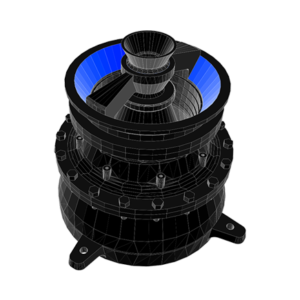
In mining and beneficiation, impact wear has the greatest impact. Extraction and processing of minerals require wear-resistant machines and assemblies, since the energies and masses of the interacting bodies are significant. For this, it is necessary to use materials with maximum wear resistance. For example, tungsten carbide is widely used in mining in top hammer drill bits, downhole hammers, roller cutters, long wall bits, long wall shears, borehole reamers and tunnel boring machines.
Silicon carbide .
Silicon carbide is an extremely hard, synthetically produced crystalline compound of silicon and carbon. Its chemical formula is SiC. The Mohs hardness of silicon carbide is 9, which is close to the hardness of diamond. In addition to their hardness, silicon carbide crystals have fracture characteristics that make them extremely useful for grinding wheels. Its high thermal conductivity, together with high-temperature strength, low thermal expansion, and resistance to chemical reactions, make silicon carbide valuable in the production of high-temperature applications and other refractories.
Malleable cast iron.
very similar in composition to gray cast iron, but during solidification, graphite forms nuclei in the form of spherical particles (nodules) in ductile cast iron, and not in the form of flakes. Typical applications for this material include valves, pump housings, crankshafts, gears and other automotive and machine components due to its good machinability, fatigue strength and higher modulus of elasticity (compared to gray cast iron), and in heavy duty gears due to its high yield strength and wear resistance .
Aluminum bronze .
Aluminum bronzes are a family of copper-based alloys that offer a combination of mechanical and chemical properties unmatched by other alloy series. They contain from 5 to 12% aluminum. Aluminum bronze is finding increasing acceptance for a wide range of applications that require resistance to mechanical wear. Its wear resistance is based on the transition from a softer metal (aluminum bronze) to a harder metal (steel) and the formation of a thin layer of a softer metal on a harder metal.
The most common modern methods of increasing wear resistance:
Alloys with coating .
Hardening by surface treatment can be further classified as diffusion treatment or localized heat treatment. Diffusion methods introduce alloying elements that reach the surface by diffusion, either as solid solution agents or as hardening agents that promote martensite formation during subsequent quenching. In this process, the concentration of the alloying element on the surface of the steel component increases. Diffusion methods include:
Carbonation.
It is a carburizing process in which the concentration of carbon on the surface of a ferrous metal alloy (usually low carbon steel) is increased by diffusion from the environment. Carburizing produces a hard, highly wear-resistant surface (medium body depth) of a product with excellent contact load capacity, good flexural fatigue strength, and good burr resistance.
Nitriding.
It is a carburizing process in which the concentration of nitrogen on the surface of the iron is increased by diffusion from the environment to create a carburized surface. Nitriding gives a hard, highly wear-resistant surface (shallow body depth) to the product with sufficient ability to withstand contact loads, good bending fatigue strength and excellent burr resistance.
Drilling
It is a thermochemical diffusion process, similar to nitrocarburizing, in which boron atoms diffuse into the substrate to create hard and wear-resistant surface layers. The process requires a high processing temperature (1073-1323 K) and a long duration (1-12 hours) and can be applied to a wide range of materials such as steels, cast iron, cermets and non-ferrous alloys.
Titanium nitride strengthening .
Titanium nitride (an extremely hard ceramic material) or titanium carbide coatings can be applied to tools made from this type of steel using a physical vapor deposition process to improve performance and tool life. TiN has a Vickers hardness of 1800–2100 and a metallic gold color.
Hardened steels .
To increase the wear resistance of steels, cementation is usually carried out on the basis of martensitic transformation. Martensitic hardening is one of the most common hardening methods, mainly used for steels (i.e. carbon steels as well as stainless steels).
Flame hardening .
Flame quenching is a surface hardening technique that uses a single torch with a specially designed head to provide very rapid heating of the metal, which is then rapidly cooled, usually with water. This creates a “case” of martensite on the surface, while the interior of the object remains ductile and strong. This is a similar technique to induction hardening. This type of strengthening requires a carbon content of 0.3–0.6 wt.% C.
Induction hardening.
Induction hardening is a surface hardening technique that uses induction coils to heat the metal very rapidly, which is then rapidly cooled, usually with water. This creates a “case” of martensite on the surface. This type of strengthening requires a carbon content of 0.3–0.6 wt.% C.
Laser hardening .
Laser hardening is a surface hardening technique that uses a laser beam to heat the metal very rapidly, which is then rapidly cooled (usually by self-quenching). This creates a “case” of martensite on the surface, while the interior of the object remains ductile and strong.
The importance of durability.
If a part is subject to wear and tear, it can become ineffective, inefficient, or even dangerous over time. Parts printed with wear-resistant material are more durable, so they can be used longer without replacement.
In addition to wear resistance, it is important to consider the coefficient of friction of the material. It refers to the amount of resistance that a substance exerts on the material moving over it. Plastics typically have a low coefficient of friction, making plastic materials prime candidates for wear-resistant parts, such as for 3D printing.
Wear-resistant materials are often used in mechanical engineering, as well as in the automotive and electronics industries – or in any environment where component parts have moving parts – such as gears, bushings or bearings – that are prone to damage from wear. Thus, wear-resistant materials are key.
Advantages of wear-resistant materials:
- Parts used during assembly or production will require less maintenance and less frequent replacement. This ensures that workflows remain fast and costs are kept to a minimum.
- When manufactured from wear-resistant materials, the parts will last longer and will be more durable, which will lead to lower costs.
OUR PARTNERS
EXECUTION OF ORDERS
1
• RECEIVING THE ORDER
• DISCUSSING THE DETAILS
2
• APPROVAL OF TECHNICAL TASK
• CONCLUSION OF CONTRACT
3
• RECEIPT OF ADVANCE PAYMENT
• MANUFACTURING OF PRODUCTS
4
• PACKAGING OF THE GOODS
• SENDING TO THE CUSTOMER